OPAIRS Insights

    Insights & Updates

    Here you will find compact analyses of the questions that manufacturing companies really care about when deploying AI: compliance, architecture, control over their own data and specialization.

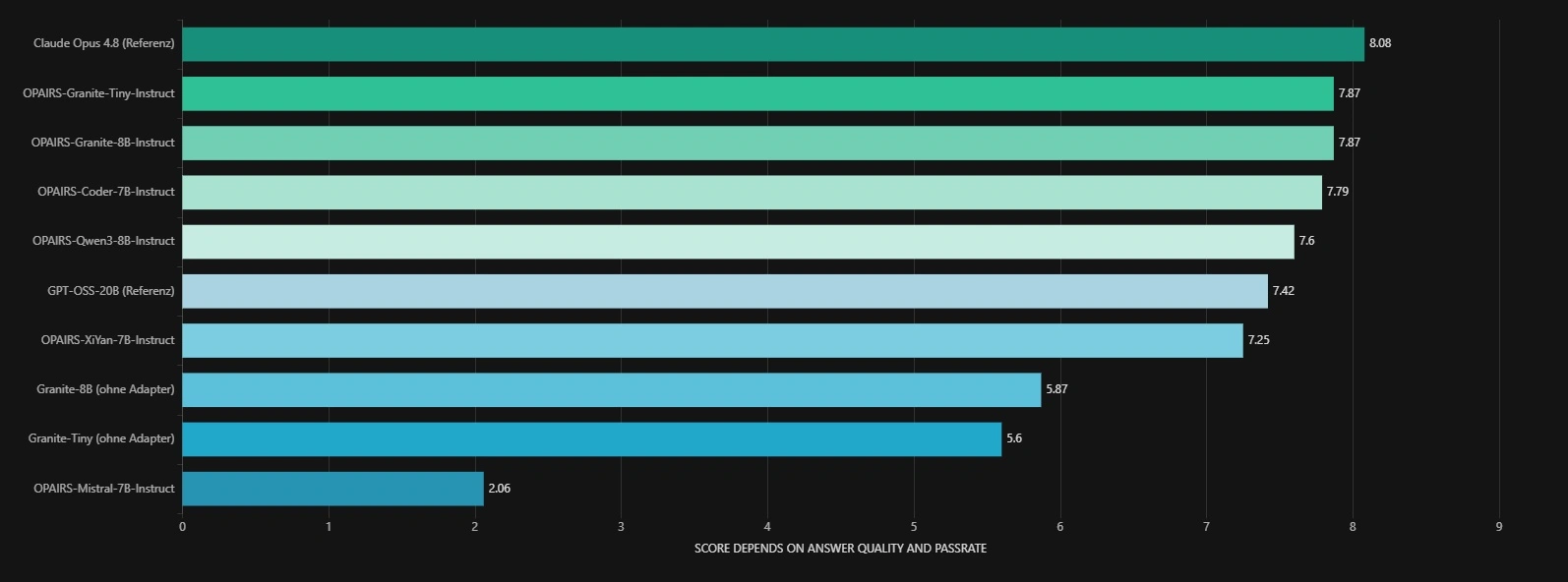
    OPAIRS SQL Agent benchmark: pass rate of all six LoRA adapters for PostgreSQL, T-SQL and Apache Iceberg compared with Claude Opus 4.8, GPT-OSS-20B and the untuned base models
    Research & Development

    OPAIRS SQL Agent: Comparing Six LoRA Adapters for Industrial Databases

    Six LoRA adapters, a 26-question catalog spanning PostgreSQL, T-SQL and Apache Iceberg databases, two external reference models: OPAIRS has systematically evaluated its SQL agent. Two Granite adapters lead the field. For production use, however, the deciding factors are not only answer quality but also speed, memory footprint, concurrency and the available context from ERP, MES, PLM and other industrial systems.

    Read article
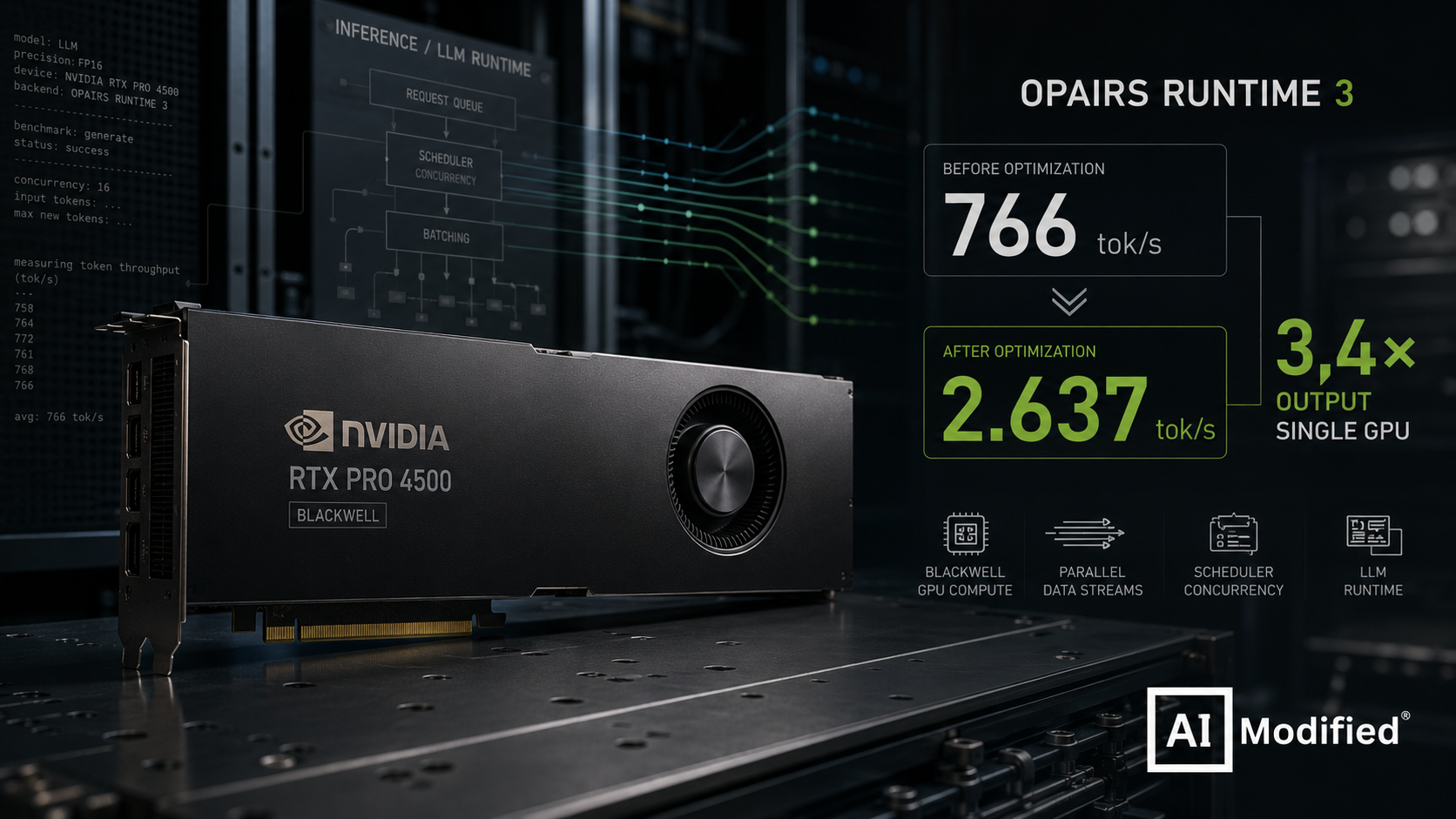
    OPAIRS Runtime 3 on NVIDIA RTX PRO 4500 Blackwell with GPT-OSS-20B and up to 2,637 tokens per second
    Research & Development

    RTX PRO 4500 Blackwell: 3.4x LLM Throughput Through Runtime Optimization

    Same GPU, same main model, up to 3.4x the output: OPAIRS Runtime 3 raises the throughput of GPT-OSS-20B on the RTX PRO 4500 Blackwell to up to 2,637 tokens/s. At the same time, the tests show why Qwen3.8-27B will not take over the production stack for now.

    Read article
    NVIDIA Inception Program badge – OPAIRS Systems is a program member
    Partnership

    OPAIRS Joins the NVIDIA Inception Program

    GPU-accelerated LLM inference on-premise: what NVIDIA Inception means for the OPAIRS stack, and why sovereign AI and high-performance hardware must go hand in hand.

    Read article
    OPAIRS EnergyManager in cooperation with aWATTar – intelligent electricity price scheduling for on-premise AI inference
    Efficiency & ROI

    When AI jobs can wait, they pay less for power. OPAIRS does it automatically.

    Electricity is not a fixed cost: it fluctuates hourly. OPAIRS uses the aWATTar API to shift AI inference and automations into low-price windows. The result: measurable returns, predictable costs, and no loss of functionality.

    Read article
    OPAIRS EuroHPC fine-tuning on the Leonardo supercomputer in Bologna for industrial AI agents
    Research & Development

    EuroHPC Grant Awarded: OPAIRS Trains Specialized AI Agents for Manufacturing

    EuroHPC grant for OPAIRS: 5,000 GPU hours on Leonardo BOOSTER for industry-specific SLM fine-tuning, with the goal of cutting inference costs by 75% compared to cloud APIs.

    Read article
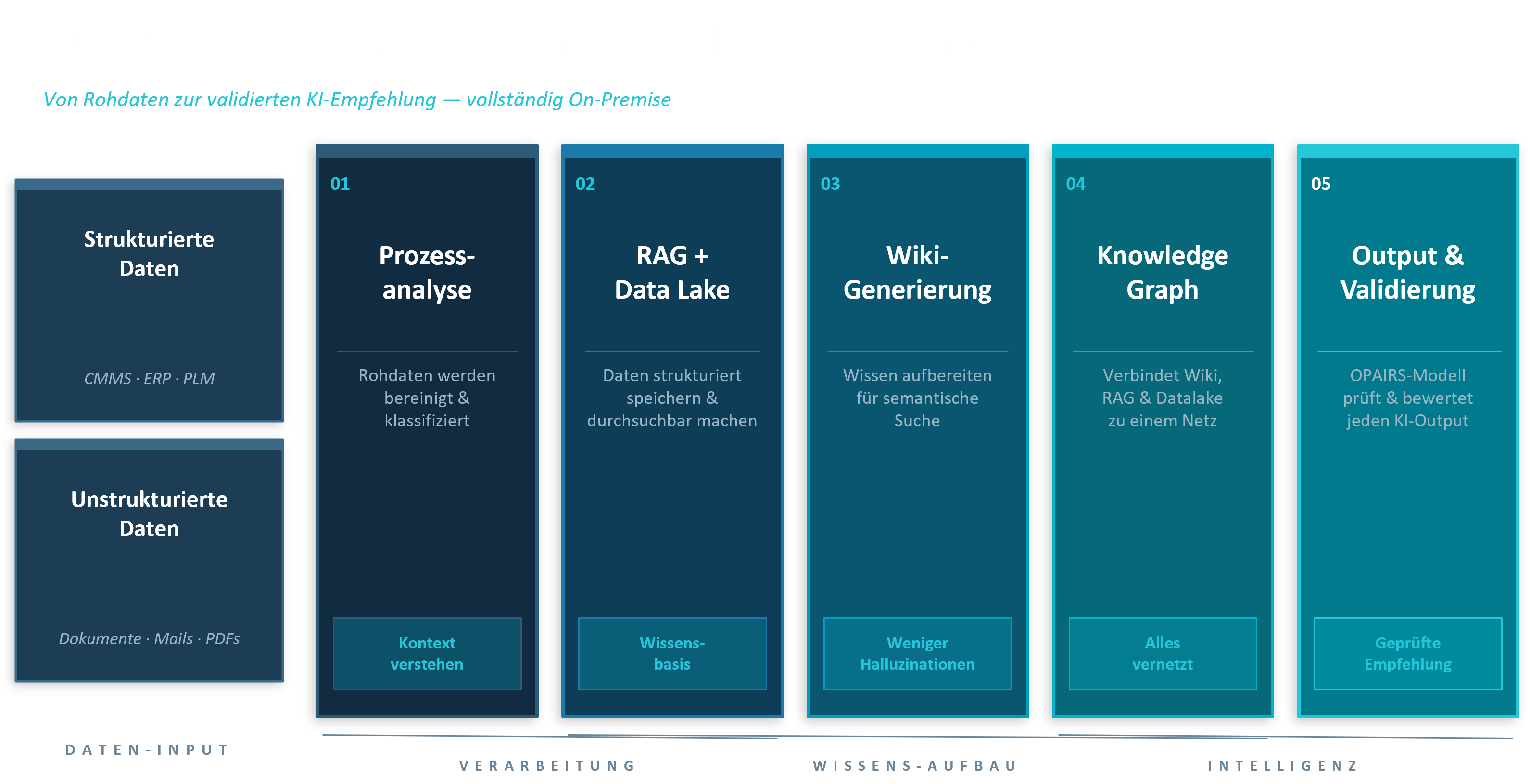
    Five-stage OPAIRS Industrial AI pipeline from raw data to validated recommendation
    Architecture

    Industrial AI Pipeline: From Data to AI Recommendation

    This is how isolated production data becomes reliable AI knowledge: OPAIRS structures, connects, and validates content in five steps for dependable decisions.

    Read article
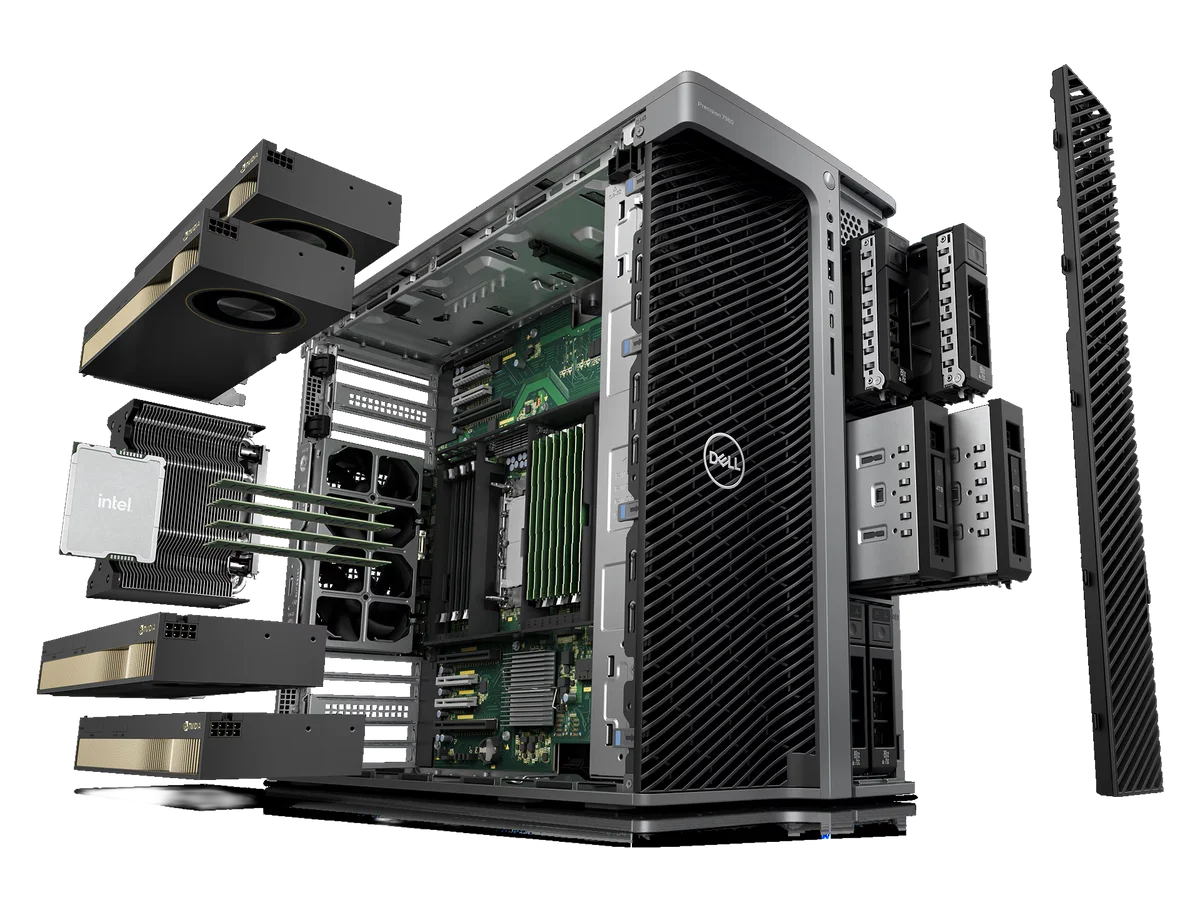
    On-premise AI workstation as a CAPEX alternative to ongoing cloud and API costs
    Economics

    AI TCO: On-Premise vs Cloud vs API Compared

    This article shows when on-premise AI tips the cost equation: including API scaling, compliance effort, and hidden risks over a 4-year horizon.

    Read article
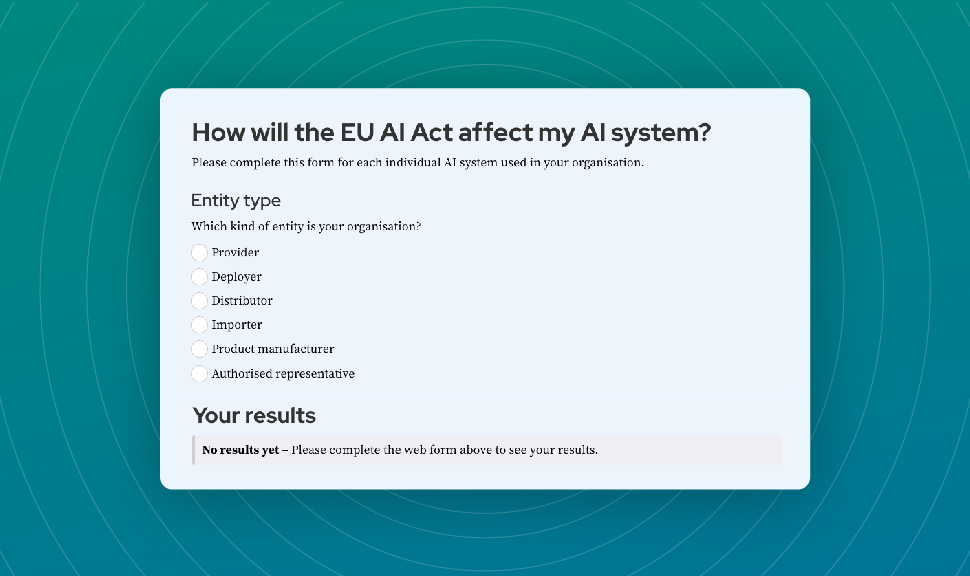
    EU AI Act compliance dashboard with requirements for audit trails and risk classes
    Regulation

    EU AI Act in Industry: Compliance Without Costly Rework

    Learn why compliance by design is critical in industry: local AI creates verifiable evidence, clear accountability, and lower regulatory risk.

    Read article
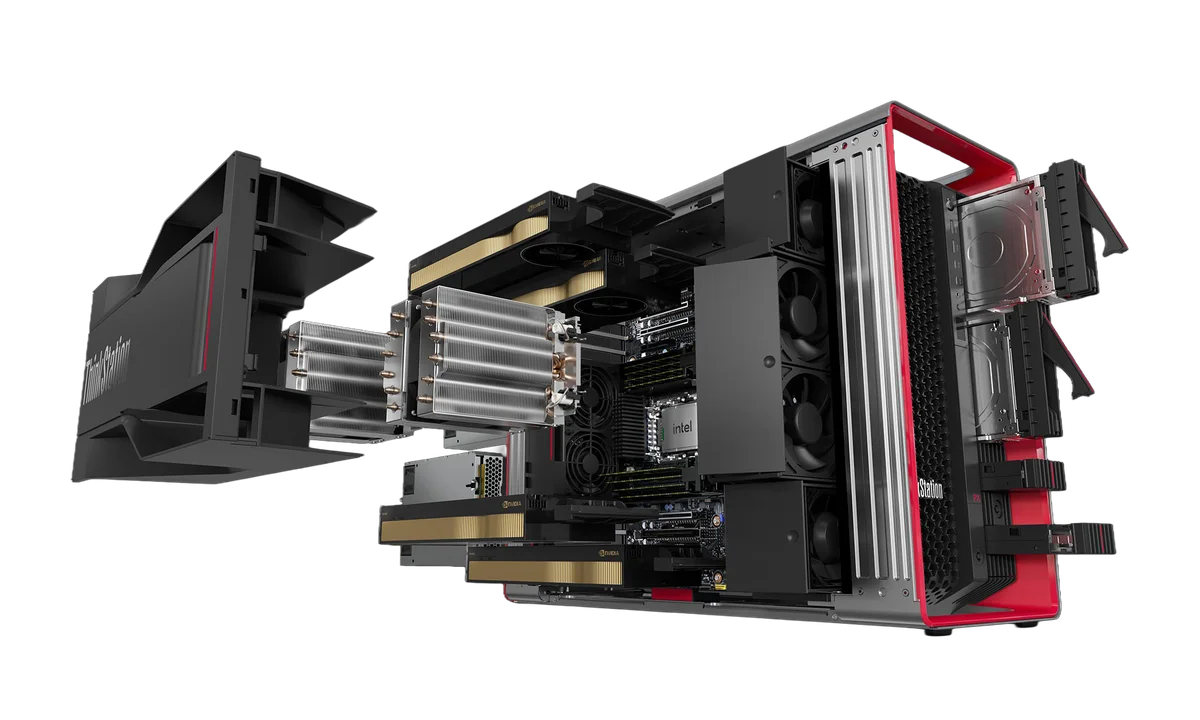
    Industrial workstation for local AI inference with low latency and high availability
    Architecture

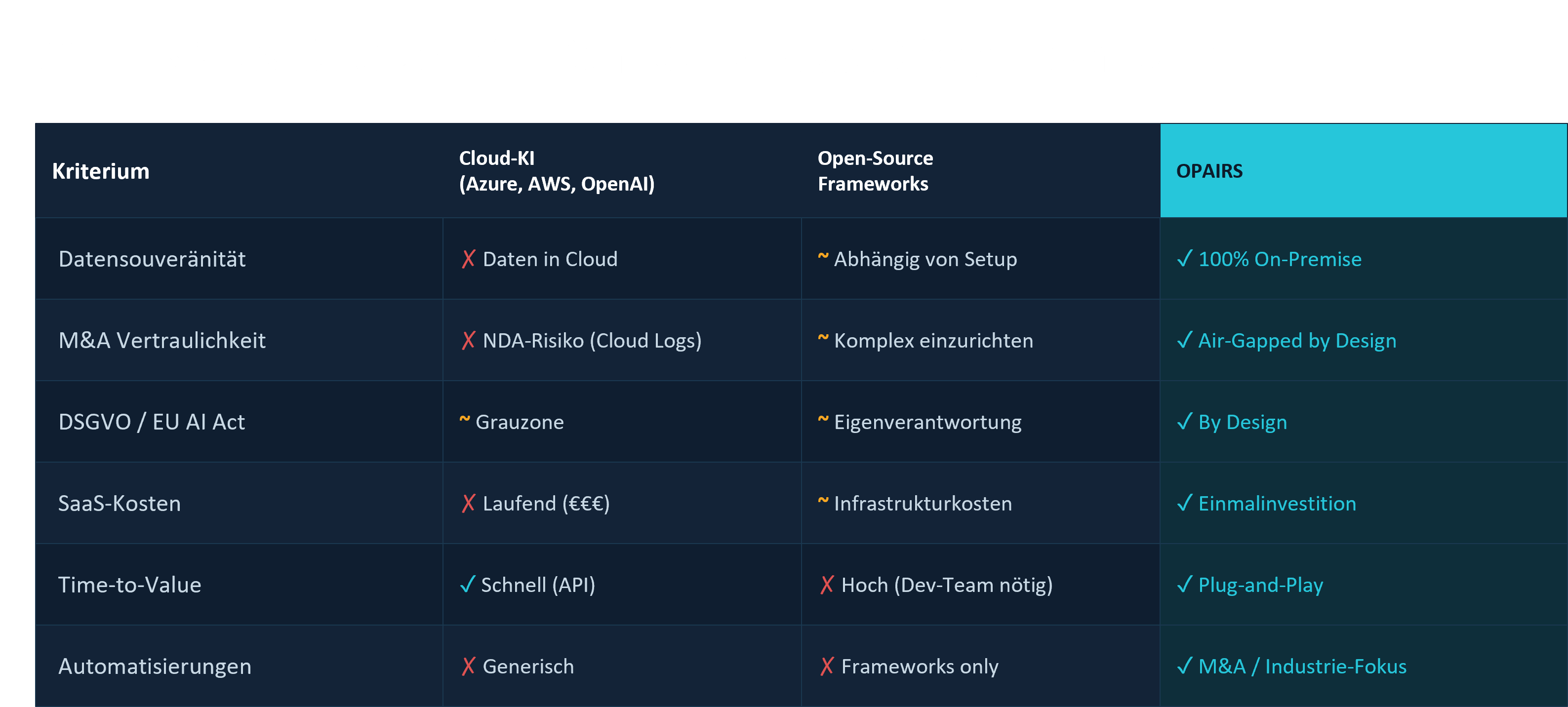
    On-Premise vs Cloud AI in Production: The Comparison

    This article explains in practical terms when cloud makes sense and why, for critical manufacturing processes, on-premise AI usually wins on control, availability, and compliance.

    Read article
    On-premise infrastructure for data-sovereign AI processing in manufacturing
    Data Governance

    Data Sovereignty in Manufacturing: Putting Data Control into Practice

    This article shows how true data control comes about: through local infrastructure, clear access rules, and full traceability of all AI and data flows.

    Read article